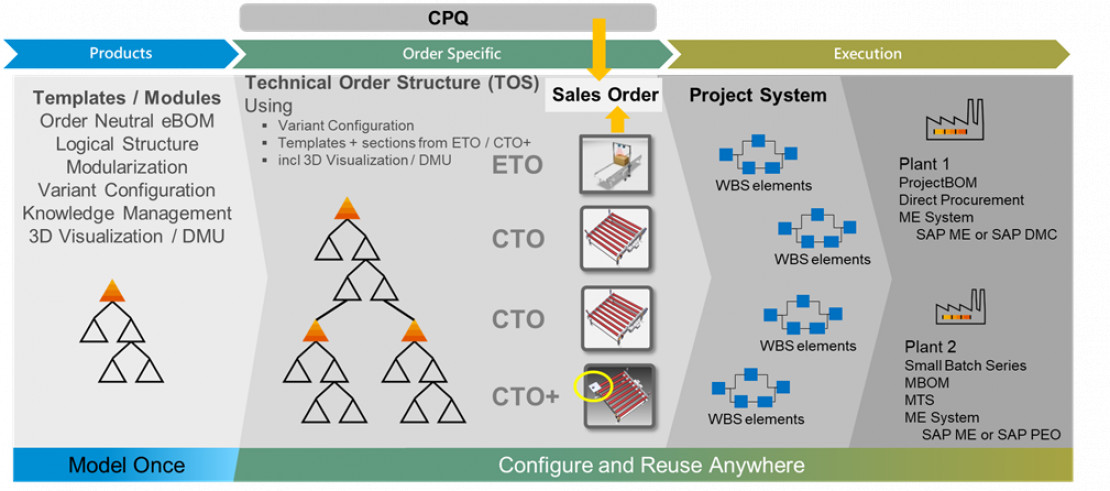

In the last two articles, we explored the benefits of configuration management for manufacturing companies in the transition from ETO to CTO (+), as well as for operators of machinery and plant. There, Maximilian Böttge (Profit Centre Lead PLM, BDF) repeatedly returned to the subject of the configuration unit, and this is examined in more detail below.
What is a configuration unit?
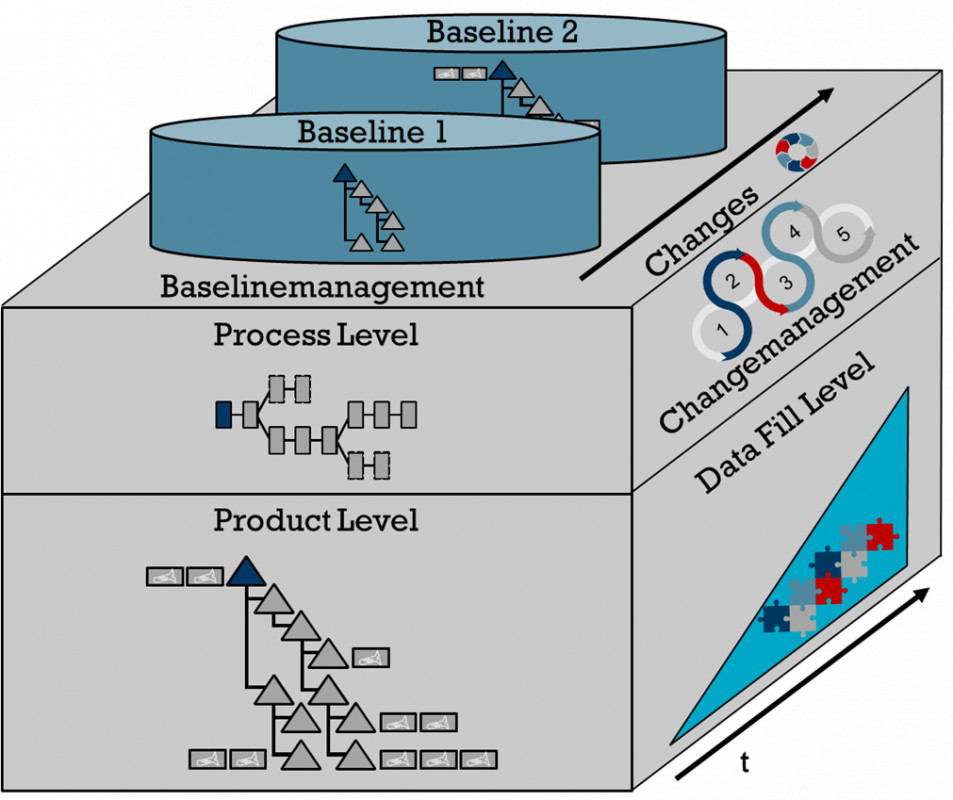
The configuration unit (also known as a configuration element or artefact) is the central entity in configuration management. It forms the link between a number of work results that relate to one another. It is also the starting point for the processes relevant to product creation and product maintenance. It is subject to integrated change and baseline management.
The configuration unit as a data and process object
The configuration unit not only brings together data information, but also serves as the starting point for the processes. In doing so, it centrally represents the original tasks of configuration management:
- Planning: The configuration unit forms the starting point for the configuration management process. It serves as a planning object for the information to be developed (for example metadata classification) and the objects (for example documents and material masters), as well as for recording results.
- Administration: The configuration unit is the central administrative object. It brings the data together and makes it available as required. The data fill level changes over time. Thanks to its integration into change management and release processes, its status can always be presented transparently.
- Control: Change and release processes are controlled on the basis of the configuration unit. The inclusion of the configuration unit in baselines at specific milestones (for example PDR, CDR, PRR) is also controlled here, in order to represent the various versions.
- Workflows and processes: The configuration unit is the central point of reference for the processes and workflows from both a product and a project perspective. Above all, this includes processes from change, release, version, release and module management.
The configuration unit as the spider in the web
In order to fulfil the tasks assigned to it, the configuration unit must be linked to various master and process objects, as well as master and process information. We generally distinguish here between two states of the configuration unit:
- Neutral configuration unit: The neutral configuration unit contains only neutral, and therefore non-project-specific, information. It is the point of reference for a release for reuse across projects. The neutral configuration unit can combine several materials that differ logistically but are identical in design (for example different surface finishes).
- Use of the configuration unit: The use of the configuration unit offers the option of storing project-specific and installation-location-specific information. The release here relates to the use of the configuration unit in the project at precisely this point. The material selection is reduced to a single material used. Depending on its state, the configuration unit therefore brings together different data.
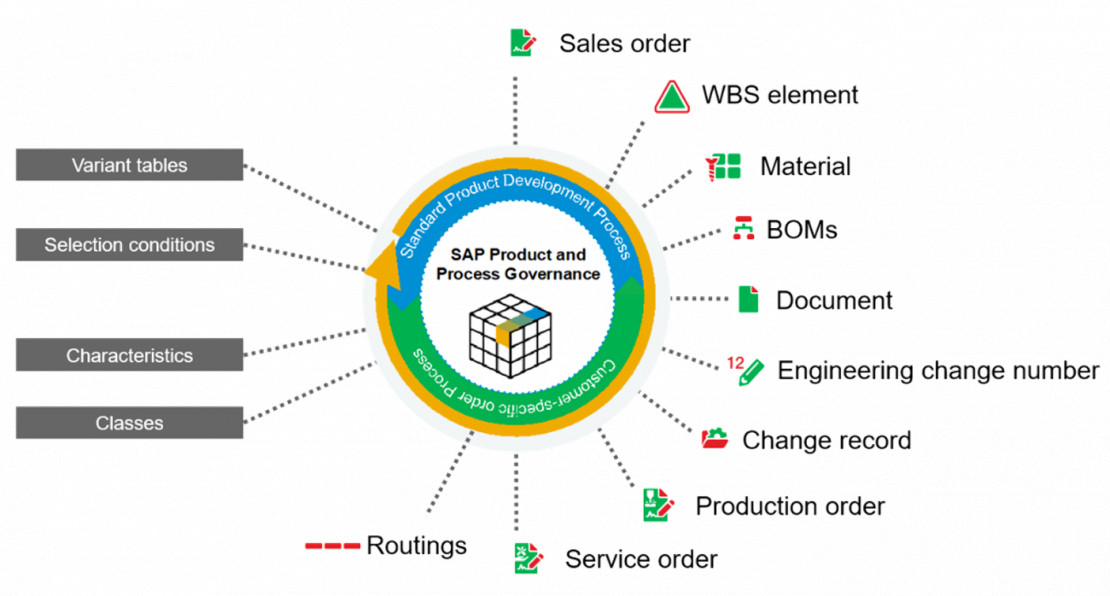
To enable the maximum integrated reuse of a configuration unit, it not only brings together purely design-related data such as eBoM, design material masters and change numbers from the design process, but also extends the data pool towards logical processing by means of logistical material masters (1:n design-to-logistical material masters), routings, production orders, controlling objects and purchase orders, right through to representing the actual status via functional locations and equipment.
(See also Hybrid modular systems by Prof. Dr Jörg W. Fischer)
Use of the configuration unit in the project execution process
The configuration unit can be used in the project execution process. Under the concept of Model Once, Configure and Reuse Anywhere, we recognise the central benefit of the configuration unit. After being released for reuse, the neutral configuration unit can be used in a project by means of the use of the configuration unit. There, the classic project execution processes ETO, CTO and CTO+ can be served. Through this use, project-specific adjustment and extension is also possible without compromising the integrity of the neutral configuration unit. Thanks to the different release types,
- Releases of the neutral configuration unit: release for reuse
- Release of the use of the configuration unit: release of project-specific use and its project-specific adjustment
the status of the configuration unit and its use is always clearly separated and transparently presented. Nevertheless, through the connection between the neutral configuration unit and the use of the configuration unit, project-specific adjustments can flow in a controlled manner into a revision of the neutral configuration unit, and product-related issues that arise in the project can be passed on to product maintenance in a controlled way.