

What is a configuration unit? A brief overview:
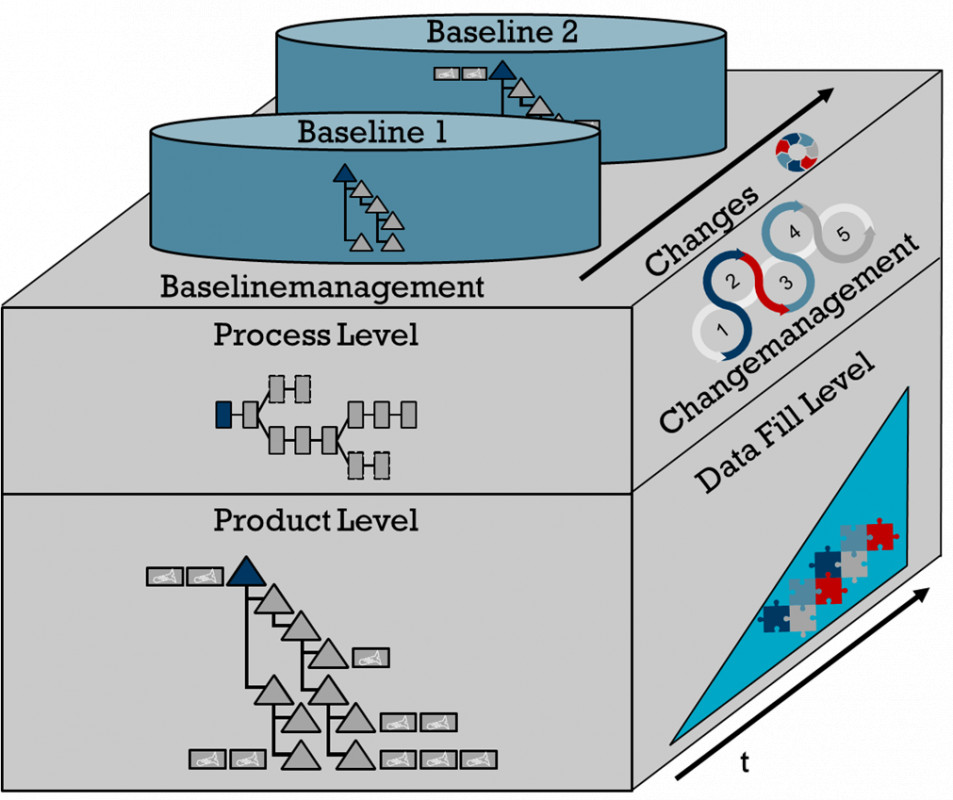
The configuration unit (also called configuration element or artefact) is the central entity in configuration management. It forms the linking point for a number of work results that are related to one another. It is also the starting point for the processes relevant to the product creation and product maintenance process. It is subject to integrated change and baseline management.
How do we get from the configuration unit to sales units?
A sales unit can be created from a configuration unit in order to sell the product directly or to offer it as a spare part. From a sales perspective, however, there are requirements to split this configuration unit so that different strategies can be represented. For example, a product may need to be advertised differently in different markets or offered at different prices. Different customers (for example in markets with a small number of large customers) or customer groups (for example A, B, C categories) may also make such a representation necessary. Duplicating material masters to represent this variance between the technical/design view (configuration unit) and the sales view (sales unit) is not advisable, as it correspondingly multiplies the effort of maintaining the master data and at the same time the direct connection between the technical/design view and the sales view is lost. In addition, different costs for the product cannot be consistently represented via the material master, since moving average prices, for example, are not fit for purpose. An abstraction layer, logically above the material, is therefore necessary. The sales unit is this abstraction layer and bundles material master, metadata and cost information.
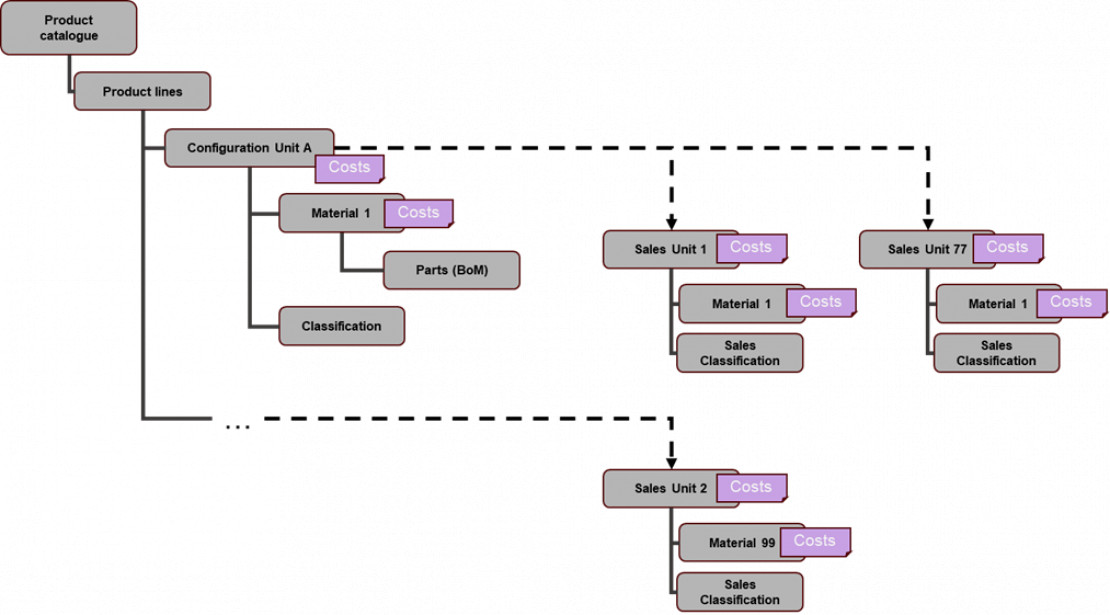
This abstraction layer makes it possible to create several sales units for one and the same material masters and to maintain different information for each. The configuration unit can serve as a template for the sales unit, and the information on the sales unit can be modified. However, the relationship between the configuration unit and the sales unit is not lost, so that holistic use can still be enabled with regard to changes (usually in the context of FFF) and impact analyses. As the sales unit is conceptually identical to a configuration unit, the same functions (baselines, product representation levels, etc.), processes (change processes, release processes, etc.) and linking options (to the SD order, to the purchase order, to the change number, etc.) can also be available for it.
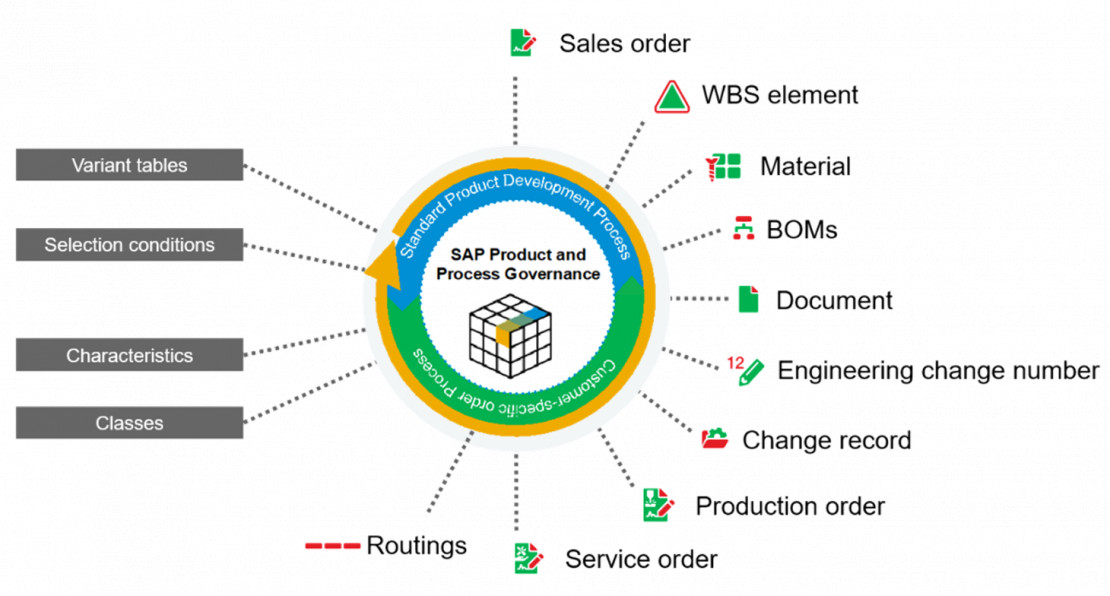
The advantages of a sales unit abstraction layer in combination with an upstream configuration unit are therefore clear:
- end-to-end process transparency
- end-to-end change processes
- end-to-end impact analyses
- flexible representation of sales strategies
- bundled representation of all relevant information in a central source of information (Single Source of Truth)
- individual process and function set for the sales unit